
• Link to Facebook
  • Link to LinkedIn
  • REQUEST A TOUR
617.868.0575
Cadbury Commons
  • Home
  • Living Options
    • Independent Living
    • Assisted Living
    • Memory Care
    • Respite Stays
  • Amenities & Services
    • Enrichment Programs
    • Dining Services
  • About
    • Events
    • History
    • Team
    • Service Area
  • Virtual Tour
  • Blog
  • Careers
  • Contact
  • Click to open the search input field Click to open the search input field Search
  • Menu Menu

Archive for category: Articles

Great Gadgets for Assisted or Independent Living Seniors

Independent living products for seniors on the market today are as innovative as they are helpful. Some also serve to bridge the digital generation gap so that seniors can retain a certain level of independence and confidence. Great gift ideas too!

Here is a list of our top 10 picks!

1. Automatic jar opener

The Hamilton Beach Open Ease Automatic Jar Opener makes quick work of those pesky jars, which can be extremely difficult for even young people. Helps seniors with arthritis or strength issues open all kinds of stubborn jars and bottles – even child-proof prescription bottles!


2.Electronic calendar for seniors

For seniors (or anyone) with memory issues, this Memory Loss Digital Calendar clock  clearly spells out the full DAY of the Week, MONTH and DATE in large, bold letters – with no confusing abbreviations. The large, bright and clear display can be seen from across the room and is invaluable for the visually impaired and the elderly.


3. Temperature-activated flow reducer

Attach this anti-scald device, to a faucet or showerhead to ensure the water stays at a safe temperature. Easy to install – no plumber needed! Can be used in private & public housing, child care centers, hotels & nursing homes. Automatically shuts-off water to a trickle before scalding occurs!


4. Motion-activated toilet night light

Just when you thought you’ve seen everything! This motion-activated toilet night light illuminates the entire bathroom so you don’t have to waste energy with a night light or keep sleep-disrupted overhead lights turned on. The built in motion sensor detects body heat to automatically illuminate the room when you enter and shut off when you leave at night. And you can choose your color, too!


5. Rocking garden seat

Being outdoors and gardening is a wonderful pastime but can be physically demanding as we age. It’s especially hard on the knees and back. With the height-adjustable, patented Garden Rocker Seat, the contoured rocking base works with you while you are weeding, planting, or just performing routine chores around the home.


6. TV listening speaker

My mother swears by this speaker! With two hearing aids, she used to blast the volume, which can be annoying to other people in the home, neighbors, or even pets. The Serene Innovations Listening Speaker enables her to hear words clearly right next to her with adjustable audio levels. It’s also portable for when you’re thirsty but don’t want to miss the dialogue when getting a glass of water.


7. Simple big button remote control
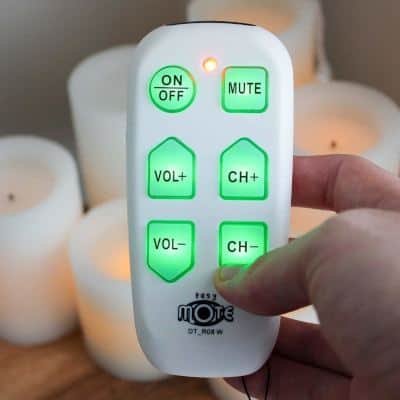
Designed for seniors in mind, this remote uses big button text for easy-to-see use, even in the dark. It also includes a strong but comfortable wrist strap to prevent it from getting lost. The remote controls both the TV and cable box and programming is simple. Especially helpful to people with low or impaired vision.


8. Doorbell-telephone flashing-light signaler

Easy to install and operate, this wireless doorbell plugs into any standard wall outlet. Use it for front, side, or back doors to gain security and peace of mind. There is a variety of melodies to choose from, but the flashing light will always work even if you set the doorbell to silent-mode.


9. Portable walking cane / chair combo

Having the ability to sit and rest comfortably can make life much more enjoyable, and allows you to stroll longer and further. This lightweight portable walking chair gives you much-needed support when you need it the most. It’s easy to fold up using the attached Velcro strap when you want to use it as a cane.
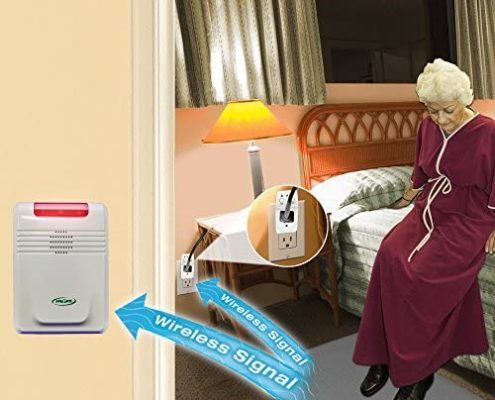

10. Smart Light Outlet

If you are concerned about your loved one getting up at night and falling, or – if they have memory issues – wandering, the Smart Light Outlet will turn on a light when triggered by a cordless floor or bed mat. The cordless monitor alerts you even if you’re in another room while providing illumination when someone gets out of bed.

These and other products can be a great help for seniors to extend their independence to improve their safety and comfort while providing caregivers with peace of mind!


https://cadburycommons.com/wp-content/uploads/2020/08/TV-Listening-Speaker.jpg 370 350 Elizabeth https://cadburycommons.com/wp-content/uploads/2018/04/CC-logo-300x81.png Elizabeth2020-08-27 16:41:272022-03-29 20:57:48Great Gadgets for Assisted or Independent Living Seniors

Senior COVID Survival Plan: Six Steps to Staying Steady

Surviving COVID, on top of ALZ caregiving, is like surviving the free fall of skydiving. It takes a Senior COVID Survival plan—and practice—to stay steady enough to open our parachutes in these stormy times. Here are half-a-dozen steps, grounded in science and personal experience, that make up my daily action plan.

1. Spotlight self-care

Because it lays the foundation for mentally managing a perilous world
So, I stress physical activity, sleep, exercise, healthy eats, and social contacts

2. Schedule uplifting activities

Because we all need to get out of our heads and into our lives
So, I engage in prized projects, healthy distractions, and enjoyable ventures

3. Take a tranquilizer

Because in-the-moment soothing can calm jittery nerves
So, I turn to the 4-7-8 breathing technique: inhale-hold-exhale—4 times

4. Adopt a broad perspective

Because it lets us be with stress, not be our stress, thus easing its hold on us
So, I mentally step back, observe, and make room for stress

5. Allow my upsets

Because common practice—pushing away upsets—just adds to our misery
So, I open myself to feelings, even when I dislike them, and just let them be

6. Give myself a hug

Because self-compassion takes the edge off feeling crummy
So, I offer kindness to myself just as I would hug a fragile friend

So, how about you? Might you consider a Senior COVID Survival plan? Given your unique values, circumstances, needs, and leanings, what daily steps might you take to maintain your steadiness, open your parachute, and survive in these scary times?

By Jerry Murphy

Jerry Murphy is a member of the Alzheimer’s Association Caregivers Support Group at Cadbury Commons run by our social worker Lisa Walts.
https://cadburycommons.com/wp-content/uploads/2020/08/quote2.png 512 512 Elizabeth https://cadburycommons.com/wp-content/uploads/2018/04/CC-logo-300x81.png Elizabeth2020-08-19 09:00:122021-02-18 14:38:03Senior COVID Survival Plan: Six Steps to Staying Steady

How to Help Seniors Transition to Long-Term Care Facilities

Caregivers who are making decisions about long-term care for seniors may be feeling the strain of the pandemic, as the current housing market is unstable. While it may seem a tricky time to make the choice to sell their home to pay for long-term care, it’s an important step to helping them get the proper help they need. Challenges aside, you can still sell a home right now, as long as you take advantage of technology and resources.

Choosing Options when Considering Long-Term Care for Seniors 

If it’s time to consider long-term care options for your elderly or disabled loved one, be sure to research the full range of living situations available. Assisted living facilities are a great option for seniors who need help with daily tasks, such as taking medications, cooking, cleaning, and bathing. If your senior needs more constant medical care or they are in decline, a nursing home may be more appropriate.

However, if your senior loved one is still able to take care of many daily tasks on their own, an independent senior living community might be right for them. Independent senior living can still provide access to important amenities such as medical care while also offering entertainment and dining options in the facility.

No matter if you choose assisted or independent living, Cadbury Commons has a team of caring and compassionate professionals that you and your senior loved one can trust. Amenities for your loved one include opportunities for physical fitness, intellectual and artistic activities, and entertaining special events and trips.

Selling Your Loved One’s Home

It may be a difficult subject to broach with your loved one, but selling their home is a key step in helping them transition into a long-term care living situation. Once the decision has been made to move, caregivers should help their loved one choose which belongings to keep. Much of this will depend on what they can take with them to their new home; some long-term care facilities such as nursing homes have limits on how many personal items each resident can bring.

It can be a sensitive process to help someone let go of belongings, so be patient as you work with them to declutter. Start small, taking on just one room at a time, and limiting the cleaning process to just 30 minutes or an hour each time. Help them make decisions about selling versus donating, and suggest they pass family heirlooms down to younger family members.

How to Use Technology to Sell a Home During COVID-19

Once you’ve helped your senior declutter their home, it’s time to get it ready to sell. During the COVID-19 pandemic, it’s a good idea to explore virtual staging instead of hiring a company. Not only is it much easier than lugging furniture around the house, it’s much more affordable.

Find a real estate agent who is savvy with virtual showing options, such as 3D walk-throughs and video tours. Taking detailed photographs and offering live video tours is the safest way to show your elderly loved one’s home during COVID-19 and can save everyone time in the long run. By using online resources for showing your senior’s home, you can weed out the casual buyers and limit the number of times people enter your loved one’s home.

Safely showing a home during a pandemic

When you’re ready to have an in-person tour, ask your real estate agent to follow strict cleaning guidelines. Place hand sanitizer at the entrance, and ask every person touring the house to use it before entering. Require masks for all viewers, and request that they limit their time in the home and avoid touching surfaces and doorknobs. Be sure to maintain physical distancing, and thoroughly clean the home between showings.

Many long-term care facilities can be expensive, and the sale of your loved one’s home will help ensure there will be funds to cover their needs. While it may be a painful process for them to let go of their home, the peace of mind gained for both you and your senior will be worth the hardship. Use technology to help sell their home safely and efficiently, and lean on an experienced real estate agent to help you through the process.

By June Duncan – june@riseupforcaregivers.org​

(Photo credit: Unsplash)
https://cadburycommons.com/wp-content/uploads/2020/08/Picture1.png 729 974 Elizabeth https://cadburycommons.com/wp-content/uploads/2018/04/CC-logo-300x81.png Elizabeth2020-08-13 22:10:352021-02-18 14:34:31How to Help Seniors Transition to Long-Term Care Facilities

5 Tips for Seniors to Keep Cool in the Heat

1. Avoid Direct Sunlight

We’ve all been somewhat cooped up recently, so it’s tempting to get out and bask in the sun. However, your skin is even more sensitive to sunlight when you’ve spent long periods of time indoors. Going out early or late in the day can help you avoid the strongest rays (and heat).

Lather up! It can be a chore, but sunscreen lotions with SPF 30 really do help prevent sunburn and irritation. Think about a light spray for your scalp if your hair is thinning.

Walk on the shady side of the street!  Or enjoy a walk on a shady trail. If you can’t avoid the full sun, it’s becoming more and more common to carry a UV-resistant umbrella. You can even buy a specially designed backpack to hold it for you!

2. Hydrate

You know the drill!  No matter what your age, staying hydrated is essential to prevent heatstroke.

Flavoring water with fruit, cucumber, or mint helps to encourage regular hydration. You can also add electrolytes if you sweat excessively. There are a wide variety of convenient bottles and thermoses that keep liquids cold (including ice cubes) for up to 24 hours.

Tired of water? Try a fresh herbal ice tea! But lose the caffeine, if possible. Because it’s a diuretic and can promote further fluid loss, it’s best to avoid it.

3. Serve Cool Foods

Did you know cooler foods can also prevent heat exhaustion? As great as it is to grill, some chilled salads, fruits or soups (like gazpacho) might be a better and healthier choice. You can add more nutrition (and protein) with smoothies. Planning to go on a boat ride or sit at the beach? Consider a portable blender; some even chop ice!

3. Choose Cooler Clothing

Stay loose! Lightweight, light-colored, breathable, loose-fitting clothing help to promote airflow, evaporation, and to reflect sunlight. If skin protection is a priority, consider UV-resistant shirts, pants, or swim attire.

Add a hat and sunglasses. If you don’t have an umbrella, there are big packable hats that you can keep in the car or even in your pocket. As we age, our eyes can have difficulty adjusting to very bright sunlight. Sunglasses help you avoid eye strain and headaches. With these heat-busting fashion suggestions, you’ll look and feel cool!

5. Bathe or Mist Yourself in Cool Water

Portable personal misters and mini AC units can really help you in a pinch. More than a fan, these lifesavers allow you to fill up reservoirs of cold ice water to provide a cool moist breeze. Some need an electrical outlet to operate, but others work on batteries or through air pressure.

Your local pharmacy may sell towels that are already moist and sealed to break open when you really need it, but you can also grab your own towel and wrap it around your neck.

If you can’t take a dip in the ocean or a pool, consider a lukewarm bath or shower.

Warning Signs of Heat Stroke

Remember to check on your senior friends, neighbors, and family during heat waves and consider seeking medical attention if you or a loved one starts to experience some of the following symptoms:

  • headache
  • nausea
  • dizziness
  • rapid heartbeat
  • difficulty breathing

A little preparedness can help go a long way to ensure a safe and enjoy summer, even on the hottest of days!

(Photo credit: “Sun over Georgia Sea Islands” by crowdive is licensed under CC BY-NC-SA 2.0)

https://cadburycommons.com/wp-content/uploads/2020/08/sun.jpg 768 1024 Elizabeth https://cadburycommons.com/wp-content/uploads/2018/04/CC-logo-300x81.png Elizabeth2020-08-07 14:10:422021-02-18 14:30:325 Tips for Seniors to Keep Cool in the Heat

A Magnet Challenges My World View

My fridge door is full of magnets with nifty and inspirational sayings.

One of them is from Satchel Paige – “How old would you be if you didn’t know how old you are?” How do I answer that? Do I feel younger than my 50-some years (whatever that means)? Am I trying to tell myself that by feeling “younger”, I can allow myself to feel “good”, “in touch”, “healthy” (and therefore definitely not “old”)!

And what is “young” and “old” anyway? The first means “having lived a short time”, the second “having lived for a long time”. And really isn’t “old” just “not younger”?

But in our society “young/old” also connote being “attractive/ugly”, “trendy/out of touch”, “interesting/dull” or “fun/cranky” – the list goes on. Yet chronological age is an increasingly unreliable benchmark of just about anything about a person. And if our society is so excited about the ability to live longer, why do we stigmatize growing older? Shouldn’t it be a celebration?

In my search for answers (or at least some interesting questions to ask), I read a book by Ashton Applewhite titled “This Chair Rocks, A Manifesto Against Ageism”. It’s a thought-provoking 278 pages. The author challenges many of the current concepts of aging, and while there is not enough room here to do the book justice about how to fight “ageism” – here are some of my favorites quotes:


• All aging is “successful” – not just the sporty version – otherwise, you’re dead.
• Ageism is a prejudice against our own future selves, making us dread our own future.
• Aging is not a disease. Aging is life itself, which is what makes it so damn interesting.
• If you hear “what do you expect at your age?”, find a new doctor.

So back to my magnet – should I remove it from my fridge door? Is the saying ageist? What do you think?

By Lisa Walts, MSW, LICSW – Social Worker at Cadbury Commons

https://cadburycommons.com/wp-content/uploads/2020/07/magnet.jpg 630 630 Elizabeth https://cadburycommons.com/wp-content/uploads/2018/04/CC-logo-300x81.png Elizabeth2020-07-29 12:49:552020-11-05 15:38:44A Magnet Challenges My World View

Ten Steps for Caring for Seniors with Memory Problems

Some people may find themselves unprepared and overwhelmed when they first begin caregiving for seniors with memory problems.

It’s normal to experience a wide range of emotions at first, from anxiety and anxiety when assuming the role of caregiver. Eventually, many find their responsibility helps to deepen their compassion.

Although everyone’s situation is different, these Ten Steps may be a helpful guide to most in learning, planning, and following a tailored caregiving plan.

Planning for Care: Seniors with Memory Problems

Step 1: Gather information.

Compare notes with family and friends as well as with your loved one. What issues have been emerging? What have people observed? Have there been changes in behavior? For example, Dad may have stopped taking his medicine or forgotten to turn off the stove. Perhaps he’s unaware of or ignored important past-due notices for mortgage or insurance payments. Getting feedback from several people can help you get a more accurate overview, and also lays the foundation for professionals to make their assessments.

Step 2. Take your loved one for a medical exam.

Some mood issues and medications can cause conditions that mimic memory impairment; seeing a medical professional who can look at physical and mental health is important to catch these problems early on when some treatments can be most effective. A full assessment helps you to formulate a care plan and understand future challenges.

Step 3. Learn, learn, learn.

You are not alone! Meet with professional social workers, doctors, and other caregivers. Find some available resources online and in the community. Read up on disease progression, common caregiving issues. Gathering information is empowering and helps to alleviate the common ‘fear of the unknown.’  Consider keeping a dedicated notebook to which you can refer or hand off to other helpers.

Step 4. Determine out the specific kinds of care assistance that will be needed.

Assessing specific care needs and your loved one’s preferences for mealtimes, shower/baths, etc., is key to developing a schedule and keeping track of the level of care needed for seniors with memory problems, which can change over time. For example, at the onset of dementia or Alzheimer’s, you may need to help with paying bills or doctor’s appointments. Later on, medication management and bathing may require more assistance.

Some local government agencies and hospitals provide low cost or free consultations (geriatric assessments). You can also obtain estimates for care managers or licensed social workers. Here are some common categories involved in assessments:

  • Personal care: eating, bathing, dressing, toileting
  • Health care: medication management, doctor’s appointments, physical or rehabilitative therapy
  • Household care: cooking, cleaning, shopping, laundering, bill paying
  • Emotional care: social interaction, enrichment activities, communication
  • Supervisory care: wandering prevention oversight and safeguarding

Look for Area Agencies on Aging (AAAs),  Caregiver Resource Centers, or other organizations that can guide you to community resources and help arrange for specific services to support you.

Step 5. Create a personalized care plan.

Now that you’ve gathered as much information that you can (perhaps with professional help), you can strategize how best to take care of your loved one AND yourself. Remember, taking care of YOU will ultimately help you with your new responsibilities. Consider both short-term and long-term needs as you will need to periodically update the plan.

Start by listing tasks that you are most comfortable with and capable of handling as well as how much time you can realistically give. Then list the tasks with which other family members, friends, neighbors may be able to help, including activities and companionship. If you anticipate obstacles or opposition, it may be a good idea to write down some strategies for overcoming any foreseeable problems. You may decide that some tasks will need to be performed by other community support services, adult day programs, or home care professionals. Have a backup plan in case of emergencies or if you are not able to continue caregiving long-term.

Step 6. Get the whole financial picture.

Caregiving can involve financial management. You may need to seek advice from a financial planner or lawyer to help you with this process, especially if your loved one is resistant. This can be a difficult change for your loved one, but if they can be involved,  transitioning may go more smoothly.

Keep a detailed record of all accounts – both assets and liabilities – and store securely. Also, consider making a backup copy to put a safety deposit box in case of an emergency.

Step 7. Understand legal issues.

You will probably want your loved one’s decisions and wishes to be carried out. It’s important to find, review, or draft any legal documents that authorize you or others to make vital financial, legal or health care decisions. Because this may also a difficult transition, having a lawyer address the issue with your loved one present can provide assurance to both you can your loved one.

Don’t forget to also collect and secure other legal information such as Social Security cards, birth, marriage certificates, divorce settlements, income tax returns, wills, etc. Research eligibility for Medicaid, low-cost elder legal services, or other community programs.

Step 8. Ensure your loved one’s safety.

Keeping to a routine schedule often helps as well as getting training or special equipment for safety. As time goes on and needs change, you may find additional resources and add more safety precautions to prevent fires or injuries.

Some suggested tasks are:

  • Store sharp knives, razors, needles, etc.
  • Assess the home for fire or poison hazards (stoves, matches, appliances, poisonous household products, etc.)
  • Prevent falls:
    • Remove or clean up furniture or rugs that obstruct pathways
    • Clean up outside object and areas that may cause falls (loose bricks, tree roots, gardening equipment, etc.)
    • Watch our for long clothing or loose-fitting shoes that may cause falls
    • Install bathroom grab bars and grips, non-skid rugs, mats, paper cups rather than glass
    • Supervise alcohol/drug use
  • Monitor and secure medicines
  • Improve lighting as necessary
  • Adjust the water heater temperature to avoid burns
  • Ensure proper nutrition and food intake
  • Take emergency precautions:
    • Identify emergency exits
    • Check locks and/or add door alarms
    • Get an identification bracelet and a current photo in case your loved one wanders
    • Gather emergency phone numbers and information

Step 9. Get support.

Connecting with other people in the same situation can provide much needed social and emotional support. You may often receive and share recommendations on local resources and tips. Consider in-person or online support groups where you can share your feelings and gain insights into coping strategies or attend local workshops, meetings, seminars.

Step 10. Practice self care!

The most important tip is to ensure your physical and mental wellbeing for yourself and your charge. Caregivers of seniors with memory problems are under extra stress and may become more susceptible to high blood pressure, depression and other conditions. By practicing basic preventative healthcare and self-care, you can protect your health and be in the best position to provide care:

  • Exercise daily.
  • Hydrate.
  • Nourish yourself with nutritious foods.
  • Make sure you get enough sleep.
  • Attend to your own medical needs and get regular check-ups.
  • Take time out for yourself! Having time to relax or be social is essential to your mental and physical health.
https://cadburycommons.com/wp-content/uploads/2020/07/woman-old-dependent-dementia-age-alzheimer-s-retirement-home-care-for-the-elderly-age-spots-thumbnail.jpg 253 338 Elizabeth https://cadburycommons.com/wp-content/uploads/2018/04/CC-logo-300x81.png Elizabeth2020-07-21 15:28:212021-02-18 14:25:11Ten Steps for Caring for Seniors with Memory Problems

Happy 100th Birthday to One of Our Residents

Congratulations, Thelma! What a milestone!  On our Facebook page, she received many congratulations and Happy Birthday wishes.


https://cadburycommons.com/wp-content/uploads/2020/07/106785450_10157204342641604_7533567981184174173_o.jpg 960 1280 Elizabeth https://cadburycommons.com/wp-content/uploads/2018/04/CC-logo-300x81.png Elizabeth2020-07-07 21:58:362026-07-02 22:39:44Happy 100th Birthday to One of Our Residents
Aging Parents Driving Conversation tips

7 Tips on How to Talk to Aging Parents About Driving

Aging Parents Driving Conversation tips

photo credit: atlantictraining.com

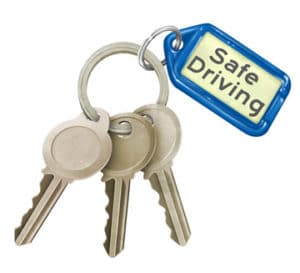
Some research shows that the most difficult conversation to have is about aging parents driving. Starting the conversation early can help, and keeping the focus of the conversation on how you can help your parent maintain his or her independence while looking at options is key.

Here are some other tips:

  1.  Start the conversation early.
  2. Observe your parent’s driving abilities so that you have details for future discussion.
  3. Consider contacting other resources. Doctors, health care providers, law enforcement officers and others can be a neutral party to aid in evaluation and discussion. They may recommend driver re-training, vehicle modifications or occupational therapy.
  4. Validate the difficulty of an issue for your parent and be understanding while bringing up your concerns. Encourage your parent to be the main participant in any decision-making and avoid being judgemental.
  5. Assess transportation needs and find alternative transportation. Adjusting to reduced driving is easier if there are other mobility choices available.
  6. Meet 1-on-1 and avoid confrontation. Stay calm and reasoned. Stick to facts and your authentic concerns for your parent’s safety and the safety of others.
  7. Be patient, listen, and don’t insist on a quick resolution. If the conversation gets heated, consider dropping the issue now and picking another moment to re-address it.

Even though the subject of aging parents driving is one of the most difficult conversations to have, it’s important to start it sooner rather than later. It may help your parent self-assess their own driving skills and to self-limit. If they are unwilling or unable to, being informed and having resources can help you can give you a road map for keeping your parent and others as safe as possible.

https://cadburycommons.com/wp-content/uploads/2018/07/Car_Keys.jpg 327 360 Elizabeth https://cadburycommons.com/wp-content/uploads/2018/04/CC-logo-300x81.png Elizabeth2020-07-01 16:05:552020-07-21 16:01:307 Tips on How to Talk to Aging Parents About Driving
Page 5 of 512345

Categories

A Personal Story

Support Group

By Alzheimer’s Association

Looking for a Family/Caregiver Support Group? We can help.

Please contact us for information.

CONTACT US

VISIT US

Thank you for your interest in visiting Cadbury Commons.

We offer scheduled personalized visits seven days a week for your convenience.

Please contact us with any questions.

REQUEST A TOUR

GET IN TOUCH

66 Sherman Street
Cambridge, MA 02140
Phone: (617) 868-0575
Fax: (617) 868-0023
info@cadburycommons.com

© Copyright - Cadbury Commons | Privacy Policy
  • Home
  • Senior Living Options
  • Amenities & Services
  • About
  • Virtual Tour
  • Careers
  • Blog
  • Contact
Scroll to top Scroll to top Scroll to top

Jimmy is a graduate of Johnson & Wales in Rhode Island with a Culinary Art Degree.  He worked at several different Boston area restaurants working his way up from Sous Chef, Chef to Executive Chef.  Prior to joining Cadbury Commons in 2010, Jimmy was the Executive Chef at The Ship.  Jimmy enjoys creating whimsical and artistic food displays for our residents.

Nancy Gonsalves is a graduate of the University of Phoenix with a BA in Human Services Management.  She has experience as residential manager, case/medical management, Alzheimer’s, and mental health.  During the pandemic she switched careers to memory care in the assisted living communities.  She is certified as a Dementia Practitioner (CDP), Montessori Practitioner (CMDCP), and a Support Group Facilitator (CDSGF).  She has volunteered with the Alzheimer’s Association for many years as a support group facilitator and advocate for community recognition of Dementia (Dementia Friendly MA).

Erika Gethers  has worked at Cadbury Commons since 2017. After graduating from Newbury College with a B.S in Hotel, Restaurant & Service Management Hotel Administration, she began her career at Cadbury as a front-desk concierge, quickly being promoted to Lead Concierge. She was then promoted to Director of Activities in Memory Care based upon her background as an event planner of her own company and her love for working with the residents in our dementia care community. Erika is now excited to expand her role to Director of Memory Care.  After three years in this industry Erika has found her passion for working with the senior population and especially those with various forms of dementia.

Since diving into this industry Erika has jumped at opportunities to learn as much as possible. For three years in a row she attended the Map through the Maze Conference by the Alzheimer’s Association, where she educated herself on various aspects of Alzheimer’s disease, staffing and activities. In 2020 she attained her certification as an Active Aging Specialist by SCW Fitness Education. She continues to learn more about the aging process, the different aspects of Alzheimer’s and other dementias, and improved ways to keep your loved ones engaged in group sessions, Montessori-based activities, and one-to-one interactions with our staff. She loves to interact with residents and joins activities when possible.  She takes great pride in the work she does and the service she provides for staff, families and residents.

In her spare time she is an event producer for her own company producing Popup Markets that bring small businesses and the local community together, as well as producing charity fashion shows.  Erika also works as a home companion for older adults in need of help.

Julie Lund has been a nurse for 21 years. She graduated from Curry College with a Bachelor’s in Nursing in 1996 and worked briefly in Long-Term Care. Soon after, she focused her career in psychiatric nursing. She worked in an in-patient psychiatric setting for 16+ years. During that time, she earned a Master of Arts in Counselling degree from Gordon-Connell Theological Seminary. She shifted gears to work in Home Care, into working for a VNA for a little over 4 years.

By happenstance, Julie found her way into Assisted Living. Julie Joined Cadbury Commons in July of 2017. With 9+ years of management experience, she has brought her management, organizational and people skills to help Cadbury to continue to evolve in meeting the ever changing and individualized needs of our residents and families. As Associate Executive Director, Julie’s focus will be on training, hiring and implementation of core policies and procedures.

Husain Yassin, a world traveler, graduated with a degree in Electronic Engineering from Wentworth Institute of Technology in 1996.  He has worked in Property Management, managing services in an apartment complex, since 2003. In that position, he honed his maintenance and management skills.

Husain was hired as Facilities Director at Cadbury in September 2014. He has elevated the art of building services and has been keeping our Community clean, functioning and beautiful, inside and out.


Kristen is a life long resident of NH and graduated from St. Joseph’s School of Nursing in Nashua, NH in 1999. She has maintained NH and Massachusetts nursing licenses since her graduation from nursing school. Over her 25 years of nursing, Kristen has worked in many different healthcare settings and with many different types of patients. Early in her career she focused on her love for children and cared for terminally ill children in their home- as well as in a Pediatric doctors office setting. She went on to work with the elderly population and after starting on the ground level, earned several promotions in the Long Term Care and Assisted Living settings. She held the position of Assistant Director of Nursing and Staff Development Coordinator at Langdon Place in Nashua NH, as well as the Resident Care Director position at Ledge wood Bay in Milford, NH.

Kristen also has her nurse teaching license in NH and taught nursing assistant classes.  She has worked in other areas such as homecare/VNA, Quality Assurance Case Manager, Psychiatrics, and Unit Manager of skilled LTC facilities. Kristen has a wealth of experience both clinically and in leadership roles.

Kristen prides herself on being very professional, thorough, and organized. She has a genuine, humble, and kind heart.

In her short time here at Cadbury, she has already rolled out and implemented ways in which workflows can be more efficient and exceptional service to our valued residents and their families at Cadbury can remain at the forefront.

Kristen is looking forward to knowing each resident personally and growing with the Cadbury team in her position as Director of Resident Care.

Elizabeth Shahinian graduated from the University of Colorado at Boulder with a Bachelor’s Degree in English. Upon graduation, she entered into a career in sales. Her career spans over 30 years in Corporate Sales and Consulting.

In 2007, she collaborated with a colleague and researched how we care for seniors. For her, it seemed a natural career and life progression to work with seniors in an Assisted Living environment, guiding families through all options available to care for their loved ones. Elizabeth joined Cadbury Commons in the fall of 2015.

Brian Bunnell has served as our Director of Community Programs since 2013, having been promoted from his prior role as an Activities Specialist. Brian is a musician, holding degrees in Music Education and Trumpet Performance from the Peabody Conservatory of Music, in Baltimore.

Brian takes great pride in the quality of engaging programs at Cadbury Commons. The Programs Department aims to approach all groups and interactions from an adult-centered perspective. He, with resident guidance, loves to present programs and activities that are genuinely stimulating, fun, and educational.

In his spare time, Brian performs with the Symphony Orchestra, and leads its operations as President of the Board of Directors.

Julie Lund has been a nurse for 21 years. She graduated from Curry College with a Bachelor’s in Nursing in 1996 and worked briefly in Long-Term Care. Soon after, she focused her career in psychiatric nursing. She worked in an in-patient psychiatric setting for 16+ years. During that time, she earned a Master of Arts in Counselling degree from Gordon-Connell Theological Seminary. She shifted gears to work in Home Care, into working for a VNA for a little over 4 years.

By happenstance, Julie found her way into Assisted Living. Julie Joined Cadbury Commons in July of 2017. With 9+ years of management experience, she has brought her management, organizational and people skills to help Cadbury to continue to evolve in meeting the ever changing and individualized needs of our residents and families. As Associate Executive Director, Julie’s focus will be on training, hiring and implementation of core policies and procedures.

Frank M. Petras has been in the Assisted Living and Senior Housing business for more than 20 years. His passion for seniors began when he saw his then 90-year-old grandfather climb the ladder of his two-story house to finish painting it. That moment solidified his desire to help people stay active as a way to fully enjoy life.

Frank received his B. A. in Psychology from Bates College in Lewiston Maine. While working as the Director of two public housing authorities on the north shore, he attended night school and received his M.B.A from the University of Massachusetts/Boston. He has served as Executive Director in both large and small senior living organizations in the last couple of decades, worked as a member of the Mass ALA education committee, and won local awards at his communities for promoting a green workplace.

Frank has a special affinity for the area as he worked as a bar back in Harvard square with a then grad student Charlie Baker at the Oxford Ale House. He is looking forward to sharing all of his experience and interests with the families and residents of Cadbury Commons.

Jeff Arnold began his career as a dishwasher for Northeastern University in the early 80’s. Since then, Jeff worked his way through the ranks at Northeastern from waiter to chef to Faculty Dining Room and Event Planning Manager, hosting events at Northeastern for notables including President Bill Clinton, Senator Ted Kennedy and President of the then Soviet Union Mikhail Gorbachev, to name a few.

Jeff took a break from Northeastern to help care for his father who was diagnosed with Alzheimer’s. After learning about the disease through his own experience, Jeff found himself drawn to working with older adults.
Jeff has been Director of Dining Services at Cadbury Commons since 2010 and brings his culinary and planning skills to provide Cadbury a well-run dining room and delicious meals.

Request a Tour

  • This field is for validation purposes and should be left unchanged.